Anime & Creativity
Why Anime-Inspired Learning Works: Storytelling as a STEAM On-Ramp
March 11, 2026 7 min readBy Joy Vernon
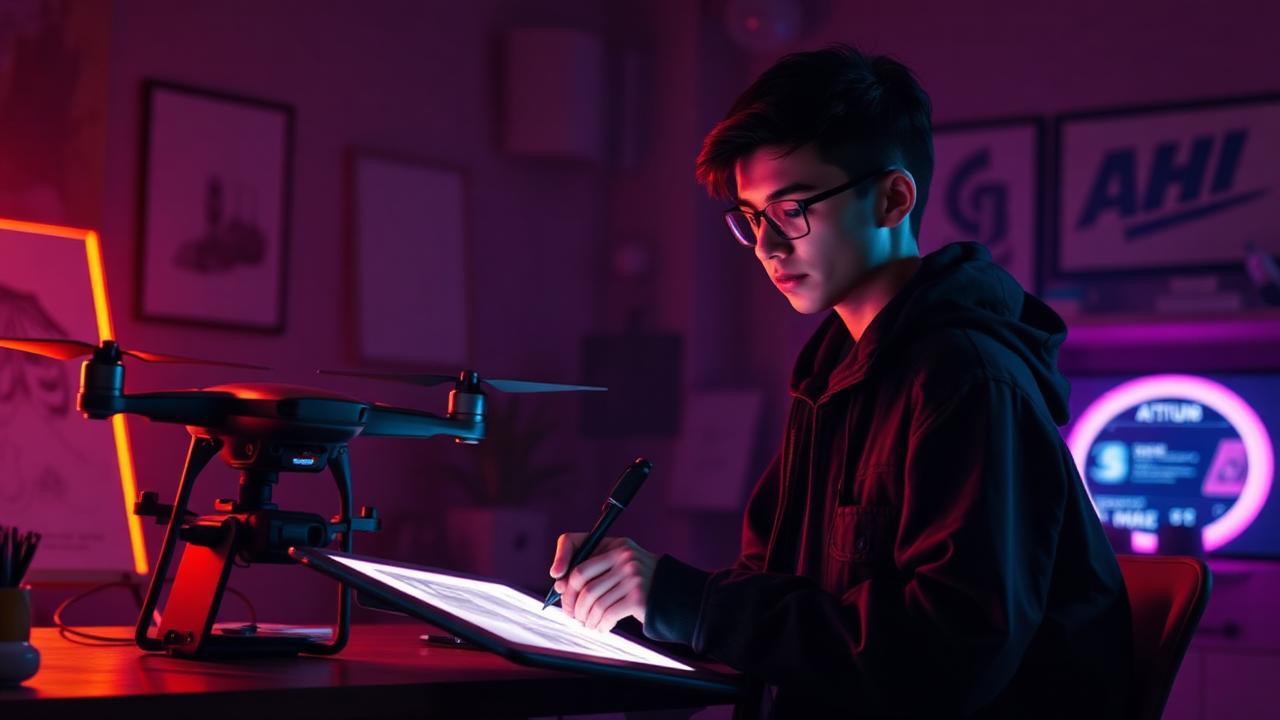
The name Okii comes from a Japanese word meaning big or great, and the anime influence in our brand is not decoration. It reflects something we observed before we could explain it: the students who were hardest to reach through conventional STEM framing were often deeply, fluently engaged with anime — and the things they loved about it were, structurally, the things we were trying to teach.
Mastery arcs teach deliberate practice
A defining feature of the genre is the long training arc. The protagonist is not naturally gifted; they are relentless. They fail publicly, get coached, drill a fundamental until it is automatic, and then face the same obstacle with a skill they did not previously have. Entire seasons are devoted to the unglamorous middle of that process.
That is a remarkably accurate model of deliberate practice, and students who have watched dozens of these arcs already believe in it emotionally. When a student cannot hold a stable hover, we do not tell them they lack aptitude. We tell them they are in the training arc, and the drill is the same one their favorite character would run. It sounds playful. It works because it reframes struggle as evidence of progress rather than evidence of limitation.
The genre is unusually engineering-literate
Anime is full of machines that are treated as characters, and the storytelling frequently lingers on maintenance, constraint, and failure modes. Pilots run diagnostics. Mechanics work through the night on a damaged frame. Power sources have limits that drive plot. Students absorb the notion that machines require upkeep, operate within tolerances, and fail in specific rather than magical ways.
Visual literacy is design literacy
Storyboarding, framing, pacing, color as emotional signal, silhouette as character design — these are the working vocabulary of animation, and they are also the working vocabulary of aerial cinematography, user interface design, data visualization, and industrial design. A student who can explain why a low-angle shot makes a character feel imposing already understands a design principle. We just connect it to a camera on an aircraft.
- Storyboard a thirty-second drone sequence before flying it, panel by panel.
- Match a shot list to specific flight maneuvers — reveal, orbit, push-in, top-down.
- Critique the footage the way an animation team critiques a cut: what is this shot doing?
- Score the edit — pacing, tension, and release are music decisions as much as visual ones.
Identity comes before curriculum
The largest barrier we encounter is not ability. It is a student's belief about who technology is for. A young person who has quietly decided that engineering belongs to other people will resist a great curriculum delivered by a great teacher, because accepting it means revising their self-image.
Meeting them inside a story they already love lowers that defense. They are not being asked to become someone new. They are being shown that the thing they already care about contains the thing we want to teach. The identity shift happens quietly, in the middle of an activity, and it holds better than any motivational speech.
How we actually build it into sessions
- 01Open with a premise, not an objective. Students are a recovery crew surveying a site, not a class practicing orbits.
- 02Give the crew roles with names and responsibilities, and rotate them so everyone flies and everyone observes.
- 03Introduce a constraint that forces engineering thinking — limited battery, a no-fly zone, a required shot list.
- 04Debrief like a production review: what worked, what failed, what changes next run.
- 05Let students design their own crew insignia, callsigns, and mission patches. Ownership drives attendance.
The honest caveats
Narrative framing is scaffolding, not substitute. The physics still has to be correct, the safety rules are non-negotiable, and at some point a student has to sit down and study airspace classifications that no story will make thrilling. We are also careful not to assume every student shares the interest; the framing is an invitation, never a requirement, and students who prefer straight technical instruction get it.
What we will defend firmly is that creativity belongs in the middle of technical education rather than at the edges of it. The A in STEAM is not a courtesy letter. Design, story, and music are how humans decide what is worth building and how to explain it to other people. A generation of engineers who can build anything and communicate nothing is not the outcome anyone wants.
So we keep the anime references, the callsigns, and the storyboards. Then we hand the student a controller and a checklist, and the training arc begins for real.
Stay in the loop
Get the next guide before the next flight day.
Joy Vernon
Music & Performing Arts, The Okii Dream Initiative
Part of the team running drone flight, aviation technology, and STEAM programs across Hampton Roads, Virginia.