STEAM Education
Drone Coding for Beginners: How Students Learn Python by Flying
February 11, 2026 7 min readBy Courtney Owens
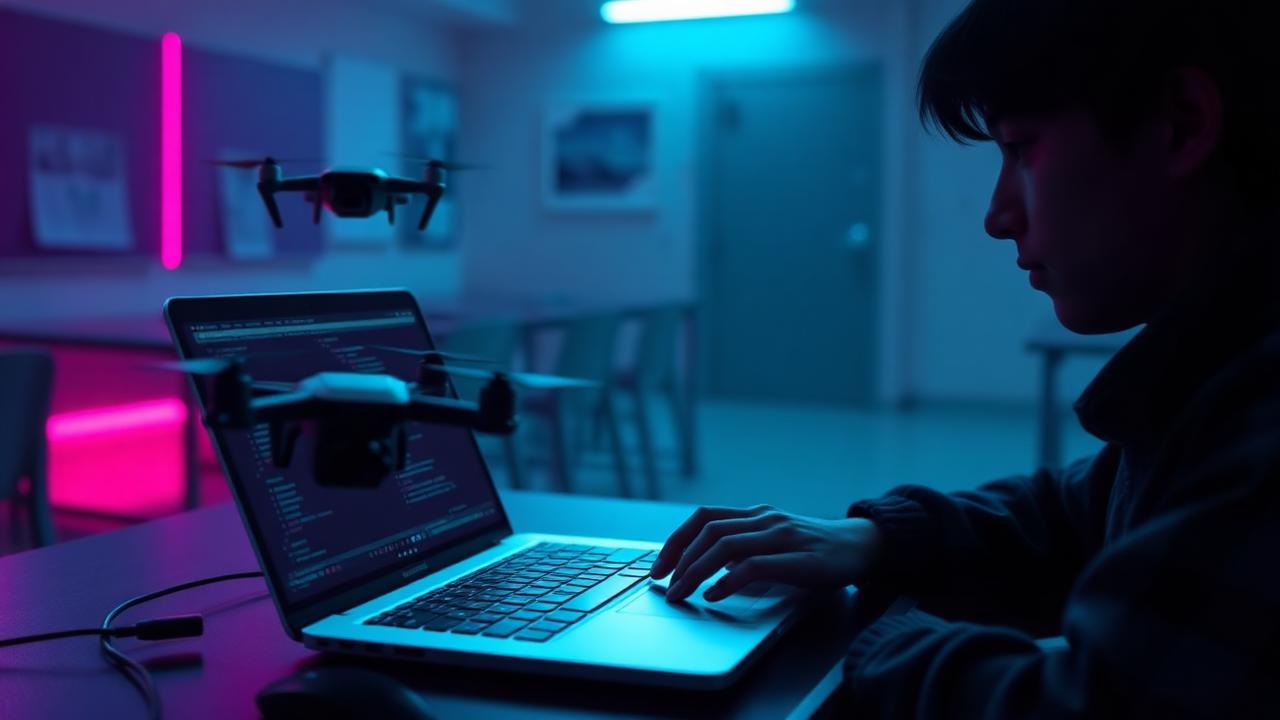
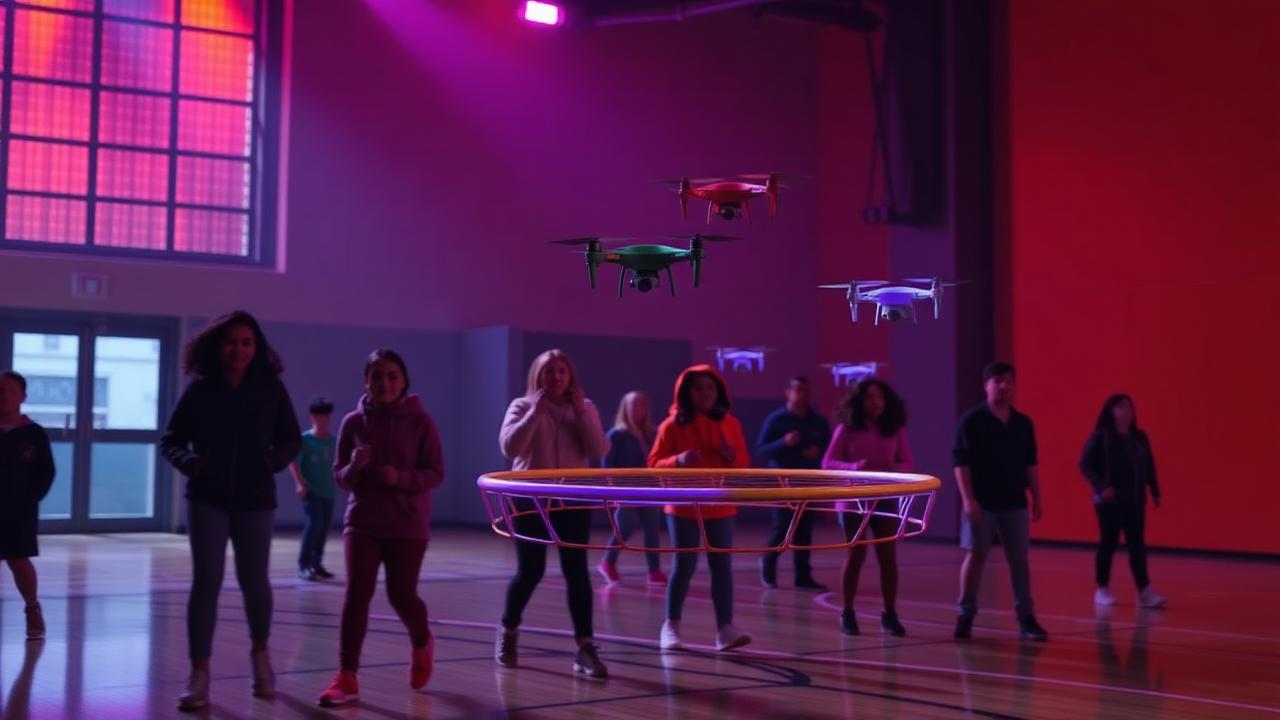
There is a moment in every coding class where a student's attention either locks in or drifts away for good. Usually it arrives right after the first program prints text to a screen. The instructor is thrilled. The student is not. Nothing happened that the student can feel. Teaching Python through drone flight removes that failure point entirely, because the output of the program is an aircraft leaving the ground.
This is not a gimmick to make coding fun. Flight is a genuinely excellent teaching domain because it is unforgiving in useful ways. A logic error does not produce a red error message you can ignore — it produces a drone drifting toward a wall. Students debug with urgency because the consequence is visible in three dimensions.
What you actually need
Educational drones built for programming are inexpensive compared to camera drones, and they are designed to be crashed. A small indoor quadcopter with propeller guards, a Python software development kit, and a laptop is a complete lab. Most classroom-grade programmable drones connect over Wi-Fi, expose a simple command API, and weigh little enough that they fall harmlessly.
- One programmable indoor drone per two students — pairs debug better than individuals.
- Laptops with Python 3 and the manufacturer's SDK installed before the session, never during it.
- Propeller guards, spare props, and at least three charged batteries per aircraft.
- Floor tape to mark takeoff pads and a clear flight box with a ceiling of at least eight feet.
Lesson one: sequence
The first program a student writes is four lines long: connect, take off, wait, land. It fails often, and the failures are the lesson. Forgetting to connect throws an error. Forgetting the wait makes the drone land the instant it lifts, which looks like a hiccup and teaches that a computer executes instructions faster than physics can respond.
Sequence is the first real computer science concept, and drones make it physical. The order of the lines is the order of the flight. Swap two of them and the aircraft does something absurd. Students who could not explain sequential execution on a worksheet explain it perfectly after watching a drone try to land before it has taken off.
Lesson two: variables and parameters
Next we introduce numbers that matter. Move forward 50 centimeters. Rotate 90 degrees. Ascend 80 centimeters. Students immediately want to change the values, and they should. Setting a distance variable once and reusing it teaches why we name values instead of scattering magic numbers through a program — change one variable and the entire flight path scales.
Lesson three: loops
Flying a square by hand-writing eight commands is tedious. Flying it with a four-iteration loop containing one move and one rotation is elegant, and students feel the difference in their fingers. This is where the abstract idea of a loop becomes obvious: repetition in code produces repetition in space.
From there the geometry does the teaching. A triangle needs 120-degree turns. A pentagon needs 72. Students who have not formally studied exterior angles derive the relationship themselves because the drone will not close the shape until the math is right. We have had middle schoolers arrive at the 360-divided-by-n rule without an instructor stating it.
Lesson four: conditionals and sensors
Most educational drones expose battery level, height, temperature, and sometimes a downward camera or distance sensor. Conditionals become natural here. If battery is below twenty percent, land immediately. If height exceeds a ceiling, descend. Students are writing safety logic, which is exactly what real autonomous systems do, and they understand instantly why the check has to run before the action rather than after.
Lesson five: functions and missions
By the fourth or fifth session, students have accumulated messy scripts. That mess is the motivation for functions. We ask them to wrap their square into a function, then their triangle, then compose a mission that calls both with different sizes. Abstraction stops being a vocabulary word and becomes the tool that makes their own work manageable.
- 01Refactor repeated code into a named function.
- 02Give the function a parameter so one function can fly many shapes.
- 03Compose several functions into a mission with a clear takeoff and landing.
- 04Add a battery guard that aborts the mission safely.
- 05Fly the mission for an audience — demonstration is part of the assessment.
How we assess it
We do not grade drone coding with a quiz. Students demo a mission and narrate what their code does while it runs. Narration exposes real understanding fast; a student who copied code cannot explain why the rotation comes after the move. We also grade the recovery: when a mission fails mid-flight, does the student read the error, form a hypothesis, and test one change at a time? That habit transfers to every technical field they will ever enter.
Why it sticks
Python written for a drone is the same Python written for a data pipeline. The syntax, the debugging loop, the mental model of state and sequence — all of it transfers directly. What flight adds is a reason to care on day one, before the student has developed the patience that abstract programming normally requires.
Our Drone Coding and STEAM Labs run this progression with students who have never written a line of code. Most of them leave having written a program that flew. That sentence — I wrote a program that flew an aircraft — is worth a great deal to a young person deciding whether technology is for people like them.
Stay in the loop
Get the next guide before the next flight day.
Courtney Owens
Education Director, The Okii Dream Initiative
Part of the team running drone flight, aviation technology, and STEAM programs across Hampton Roads, Virginia.