Aviation Careers
Drone Careers in 2026: The Jobs Nobody Told Your Student About
February 25, 2026 8 min readBy Shaymon Owens
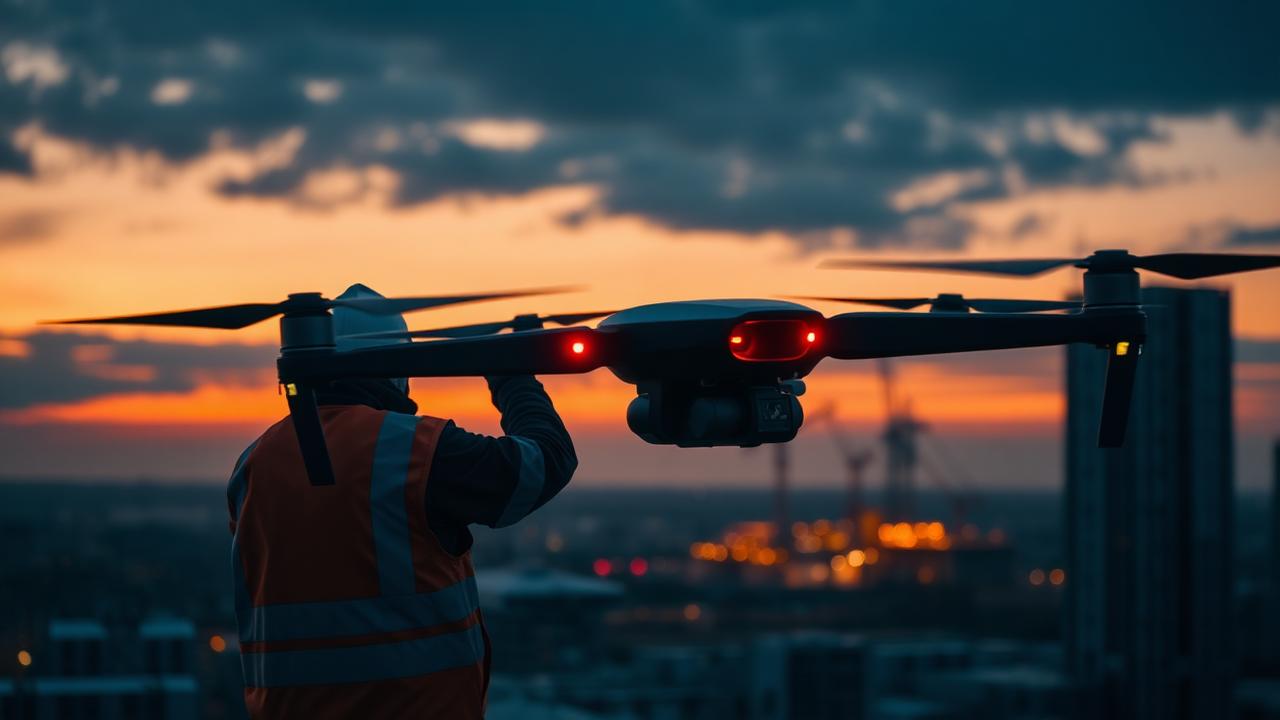
When a student tells a relative they want to work with drones, the response is usually a polite version of the same question: is that a real job? It is a fair thing to ask, because the visible end of the industry — wedding videos and social media b-roll — is the smallest and most saturated part of it. The parts that actually employ people at scale are unglamorous, technical, and largely invisible to the public.
The credential that unlocks the field
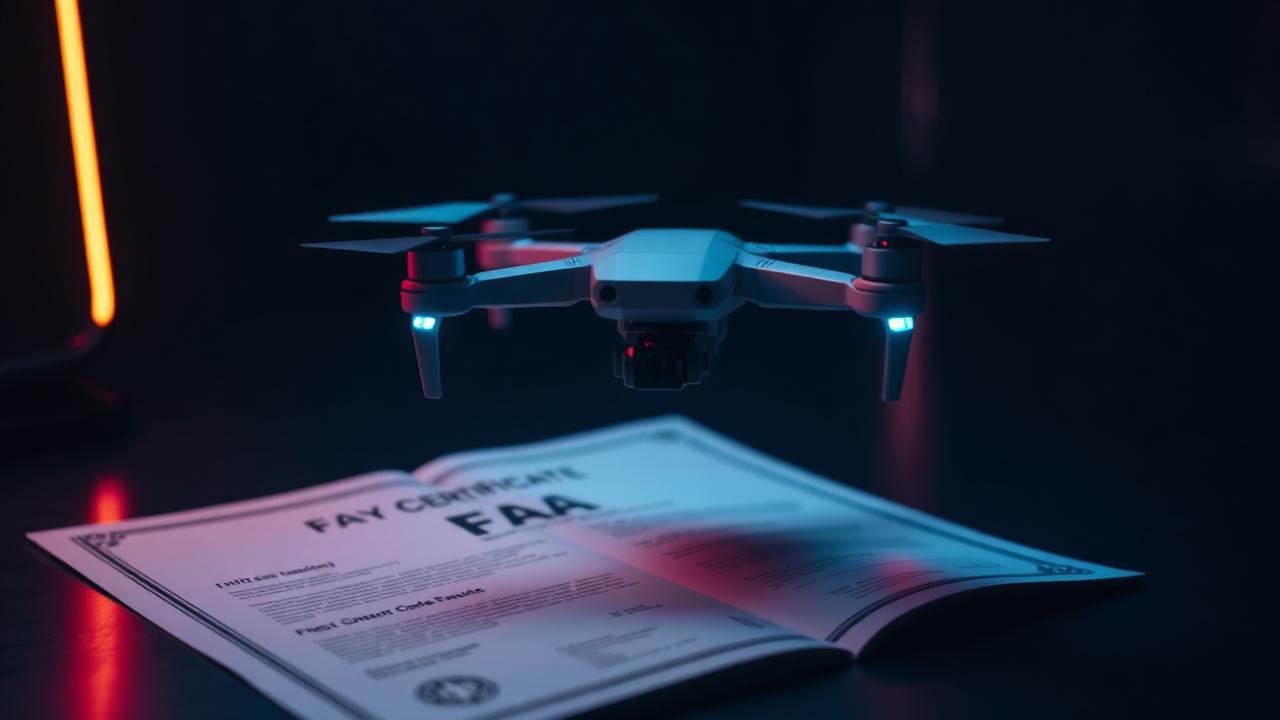
Commercial drone work in the United States requires an FAA Part 107 Remote Pilot Certificate. A candidate must be at least sixteen, pass a proctored aeronautical knowledge exam at an approved testing center, and complete recurrent training to stay current. There is no flight hour requirement and no degree requirement. That combination is unusual and important: a sixteen-year-old with a study habit can hold a federal aviation credential before they graduate high school.
The exam covers airspace classification, weather, aircraft loading and performance, emergency procedures, radio communication procedures, and the regulations themselves. It is genuinely difficult for someone with no aviation background, which is why we treat TRUST and hands-on flight as the runway toward it rather than a replacement for it.
Infrastructure and asset inspection
This is the largest commercial category and the least known. Cell towers, bridges, power lines, wind turbines, refinery flare stacks, and commercial roofs all need routine visual inspection. The traditional method involves rope access technicians, bucket trucks, or helicopters. A drone with a high-resolution camera and a thermal sensor does the same survey in a fraction of the time with nobody suspended in the air.
Inspection work rewards pilots who understand what they are photographing. A roofing inspection pilot who can identify ponding water and membrane seam failure is worth far more than one who simply flies a grid. This is why we push students toward pairing flight skill with a domain — construction, utilities, marine, insurance.
Public safety and emergency response
Fire departments, sheriff's offices, and search and rescue teams increasingly operate their own drone programs. A thermal-equipped aircraft finds a missing person in a wooded area at night far faster than a ground team. Fire commanders use overhead thermal to see where a structure fire is actually burning behind a wall.
These roles usually sit inside an existing public safety career. A firefighter or a paramedic who also holds Part 107 becomes the department's drone operator, often with additional pay and always with more responsibility. For students in Hampton Roads, where public safety agencies are major employers, this is a realistic and stable path.
Mapping, surveying, and GIS
Drone photogrammetry converts hundreds of overlapping aerial photos into precise 3D models and orthomosaic maps. Construction firms use them to track progress and calculate stockpile volumes. Surveyors use them to cover acreage that would take days on foot. This work sits at the intersection of flight and data processing, and the data side is where the higher pay lives.
- Flight planning software and mission design for consistent overlap.
- Ground control points and survey-grade accuracy.
- Photogrammetry processing and point cloud cleanup.
- GIS fundamentals — coordinate systems, layers, and deliverable formats.
Precision agriculture
Multispectral sensors reveal crop stress before it is visible to the eye, letting growers treat a problem area rather than an entire field. Larger spray drones apply inputs to specific zones. Agriculture rewards operators who can interpret imagery and translate it into an agronomic recommendation, which again is a data skill layered on top of a flight skill.
Cinematography and live events
This is the category everyone imagines, and it is real work — but it is competitive and reputation-driven. The pilots who thrive treat it as a film job first and a flight job second. They understand lenses, lighting, continuity, and how to work on a set without slowing production down. Students drawn to this path should build a portfolio and learn editing as seriously as they learn to fly.
Adjacent roles that are not piloting
Not every drone career involves holding a controller. The industry needs technicians who repair airframes and calibrate sensors, software engineers who build flight planning and fleet management tools, data analysts who process imagery, trainers who certify new pilots, and program managers who run enterprise drone operations and handle compliance.
A realistic path from sixteen
- 01Earn TRUST and log real stick time until hovering and orientation are automatic.
- 02Study for and pass the Part 107 exam at sixteen.
- 03Pick a domain — inspection, mapping, public safety, or media — and learn its vocabulary.
- 04Build a portfolio of ten complete jobs, even unpaid ones for local nonprofits.
- 05Learn the data side: photogrammetry software, thermal interpretation, or editing.
- 06Get insured, register a business or join a crew, and take referrals seriously.
We will not print salary figures here that we cannot verify for our region, and we would rather a student research current local postings than trust a number from a blog. What we can say from experience is that the barrier to entry is a study habit and a sixteenth birthday, not a tuition bill. For a lot of the young people we work with, that is the whole point.
Stay in the loop
Get the next guide before the next flight day.
Shaymon Owens
Founder & CEO, The Okii Dream Initiative
Part of the team running drone flight, aviation technology, and STEAM programs across Hampton Roads, Virginia.